The evolution of a one-of-a-kind lamp often starts with a certain part, be it metal, glass or what ever I find, and a vision of what I think that particular part might become as a finished lamp.
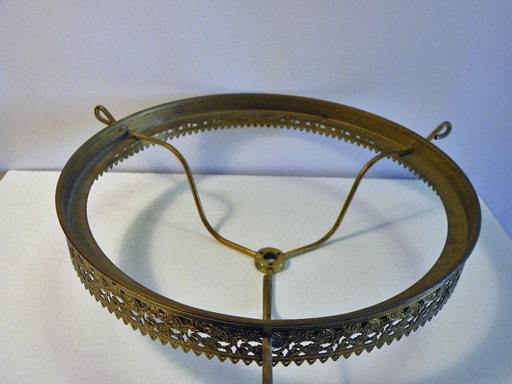
Here I started with an old, solid brass shade holder from a tacky, 1950s kitchen light. The light had plastic baubles dangling from the rim, and a grannie-esque painted glass shade with pink cherrubs flying about. It also had rusty chain links and a white ceiling medallion. But because the ring was solid brass, I thought it could become part of a Victorian hall lantern.
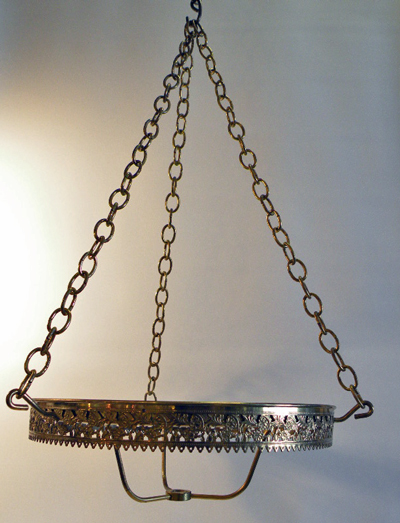
I found some small link brass chain that complimented the size of the wires used to make the shade holder. The chain also matched to patina of the shade holder quite nicely.
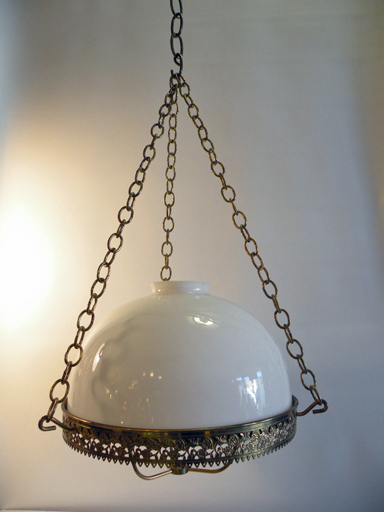
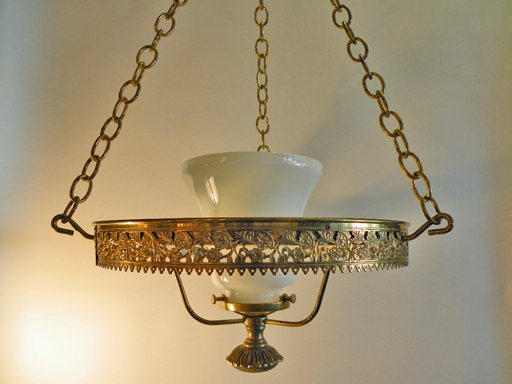
The next step was to find a proper shade to sit in the ring. Here I found a vintage, Corningware diffusor glass originally used on a floor lamp. It is a very well made, opal glass shade which will diffuse the light evenly. Unfortunately, it does not have a finished top, and that needs to be addressed next.
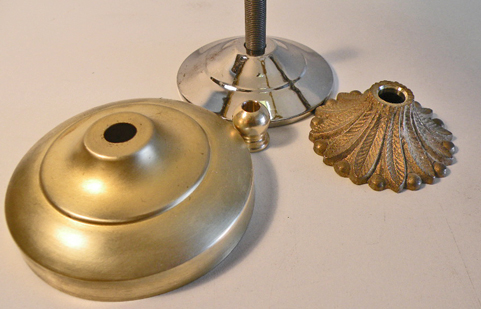
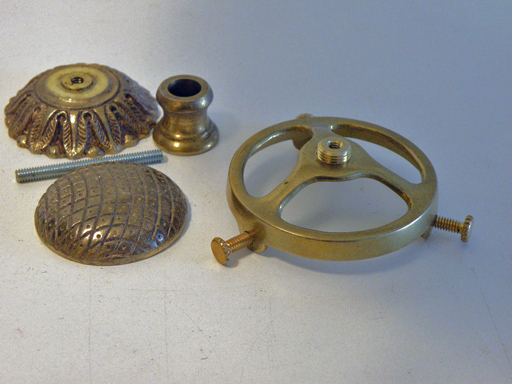
Here are some parts I gathered to create a new, decorative top for the glass shade. Some parts are new, some old. The trick is to incorporate parts to look like they have always been together.
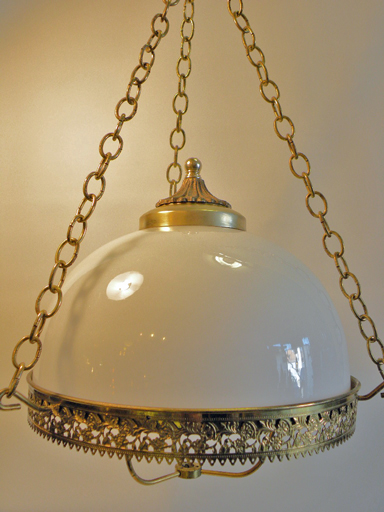
The decorative top is complete with a patina matched to the finish of the ring.
I want to illuminate this lantern from the top so as to avoid having wires going up the chain, so I drilled a hole in the finial at the top of the decorative peice to allow a wire to travel through.
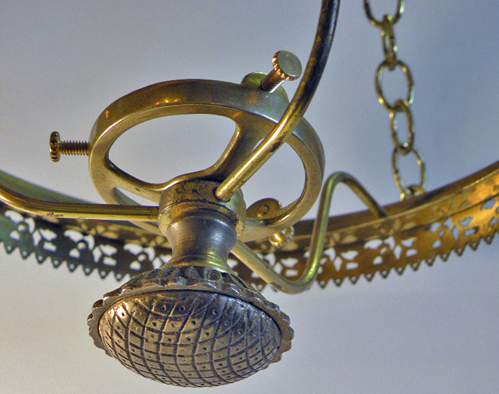
These are parts I will use to create a decorative finial for the bottom of the lantern. Again, this is a collection of old and new components. I also want another, smaller shade holder to go inside the large glass shade so when you look up at the completed lantern, you are not staring at a bare light bulb.
This is how the bottom finial worked out.
I found another old, opal glass shade for the interior of the lantern. This one is a hand blown, cased glass shade from the French glass company Viané. This will do a great job hiding the light bulb.
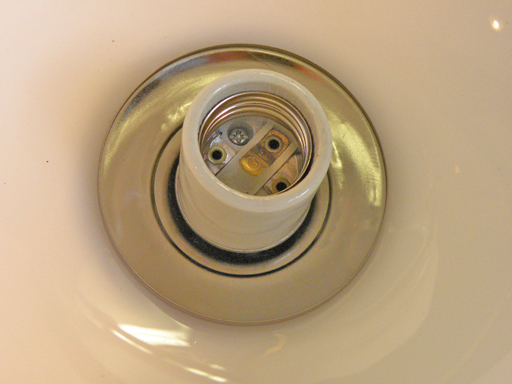
The most important part to any light is the electrical components. Here I am using an industrial grade, creamic socket and high temperature wiring with the assumption that when completed, this lantern will be used a lot throughtout the day.
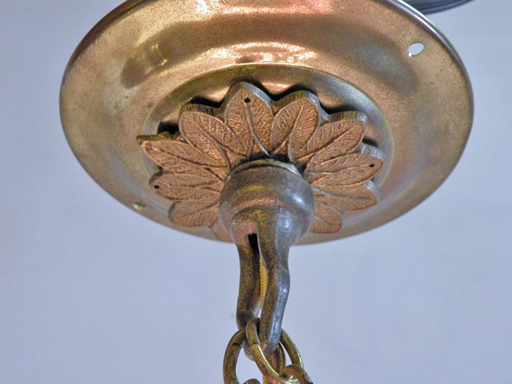
This is the canopy I came up with. I used all salvaged components to create what I hope is an interesting transition from the ceiling to the lantern.
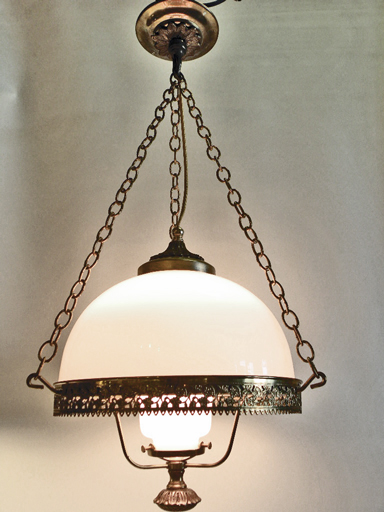
The finished hall lantern.
© 2013 The Lamp Repair Shop. All rights reserved